

Search is changing fast. Your buyers now move between Google, Bing, and tools like ChatGPT or Gemini. They expect answers in seconds. Many will never click a blue link. That’s why it’s a huge ask for every B2B SaaS founder and CMO to find the answer to how to rank on ChatGPT and Google Overviews.
Therefore, SEOs and content marketers need to understand two things: traditional SEO and Generative Engine Optimization (GEO). Both matters to rank on ChatGPT.
Google still drives about 90% of web traffic, and search queries on Google grew 20% in 2024 (SparkToro).
At the same time, AI Overviews and LLMs like ChatGPT are shaping decisions earlier in the journey.
If someone asks ChatGPT for the best appointment booking plugin under a set budget, your brand either appears in the response or it does not. The same goes for Google AI Overviews. Missing out means fewer leads and getting beaten by rivals to rank in GPT.
This guide explains, how to rank on ChatGPT search, what GEO is, how it differs from SEO. It will also show how B2B SaaS companies can rank on ChatGPT and AI Overviews.
We will cover indexing, content strategy, and brand mentions. All practical actions, not just rote theory.
What Is Generative Engine Optimization (GEO)?
Generative Engine Optimization (GEO) or AI search means making your brand visible inside AI-driven results. It is also called AEO (AI Engine Optimization) or LLM search optimization.
Unlike SEO, GEO does not focus on driving clicks to your website. Instead, it focuses on your brand being named or cited when someone uses ChatGPT, Gemini, or any AI assistant to find solutions.
When a prospect types “Best appointment booking software for a gym fitness trainer with $5K budget and Google Calendar integration,” the AI will return a list of names.
If yours is not in that list, you lose that chance to rank on GPT.
The AI pulls the answers from trusted sources. That is why your content must exist in places where LLMs collect data.
GEO or LLM SEO search is about:
- Building strong brand-category associations.
- Making your site easy for AI to extract and summarize.
- Earning mentions on trusted third-party sites.
It works alongside SEO, not instead of it. Google still dominates traffic, but AI engines are growing fast (Semrush).
GEO vs SEO: Key Differences and Why Both Matter
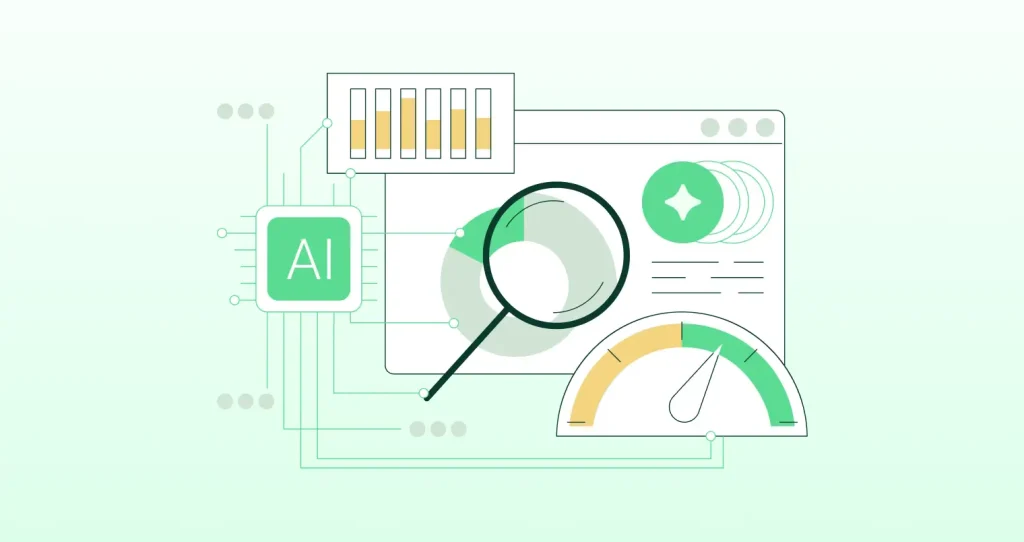
GEO and SEO are not the same job. You need both. They support each other.
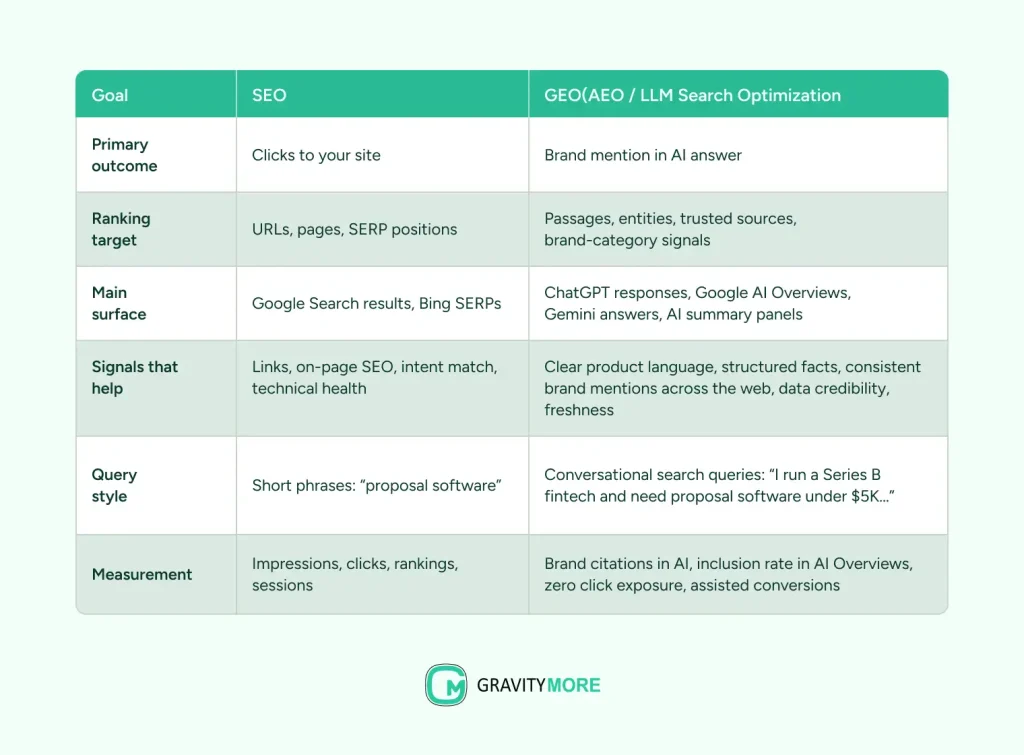
SEO is about getting your pages to rank in search engines, earn clicks, and bring traffic.
GEO (also called AI Engine Optimization or LLM search optimization) is about getting your brand named inside chatGPT responses.
The user may never click. Your visibility depends on being cited, summarized, and mapped to the right category in order to rank in ChatGPT.
Below is a simple comparison and why you cannot ignore either side.
GEO vs SEO: Quick Table
When Buyers Use SEO or ChatGPT For Search
Buyers still use Google for fast, broad discovery. Google feeds LLMs and AI overviews, which themselves decide to rank a brand.
Research from SparkToro and Datos shows Google Search grew more than 20% from 2023 to 2024 and receives roughly 373 times more searches than ChatGPT.
Google also continues to send the majority share of referral traffic on the web, far ahead of other sources. (sparktoro.com)
At the same time, AI search is rising. Google AI Overviews now appears across more result types and even in Discover for mobile users, where AI summaries reduce the need to click. Publishers worry because these AI search platforms contribute to more zero-click behavior.
This zero click pattern has been seen before in Google; especially for B2B SaaS marketers. And AI layers appear to be increasing it in some verticals.
SparkToro’s zero click research showed that many searches already ended without a visit, which raises the stakes when AI-friendly answers sit above the results.
Why AI SEO Matters For B2B SaaS
Your buyer may now ask an AI tool a long, specific question that includes budget, tech stack, team size, and integration needs. If the model has seen your brand tied to that use case, you can appear even if your site never earns the click.
That is new exposure you do not get from classic SEO alone. This pattern matches how B2B users test tools like ChatGPT for comparison research.
Semrush clickstream work and industry reporting show many ChatGPT sessions begin after a traditional search, which means your SEO footprint influences Generative AI search visibility.
Analyses of SearchGPT and ChatGPT citation data found that roughly 87 percent of cited sources aligned with top Bing rankings. Practitioners now track Bing SEO, Bing indexing, and IndexNow feeds as part of an AI visibility plan.
What This Means For Your LLM Optimization Strategy
- Keep doing B2B SaaS SEO to win qualified organic traffic from high intent keywords. Google still sends most visits.
- Add Generative Engine Optimization steps so AI systems can use and cite your brand in complex answers. Include structured facts, integrations, pricing clarity, and industry positioning.
- Monitor zero click search trends in your space. If AI Overviews or answer boxes absorb queries you target, shift some effort toward entity-level and brand mention coverage across trusted third-party sites. Search Engine LandSEO.com
- Track and improve Bing indexing. It matters for ChatGPT ranking and broader AI search visibility.
Why B2B SaaS Needs to Care About How to Rank on ChatGPT Search
AI-driven search is changing how your buyers research products. They are not typing short keywords like “proposal software” anymore.
Instead, they are asking full questions with context:
“I’m a CMO at a travel booking company. We have a $10K budget, need Google Meet integration, and want to roll out hotel reservation package in 30 days. What are my best options?”
That level of detail is normal in ChatGPT or Gemini. It is not common in Google overviews yet. And that is why B2B SaaS brands cannot ignore AI search optimization.
Why Prompts Matter for LLM Content Writing Strategy for SaaS
When someone gives an AI model that much context, the answer is usually a curated list. If your brand is not on that list, you lose the chance to influence the buying decision.
Unlike a Google results page, there is no second page to check. This is what makes Generative Engine Optimization (GEO) critical for B2B SaaS.
AI systems look for authoritative, clear, and structured data. They rely on:
- Bing’s index for ChatGPT
- Google’s index for Gemini
If you want visibility in AI searches, your website must be present in the above indexes. Also, your brand must appear in trusted sources.
LLM Search vs Google Search Behavior
- Google search: Still dominates traffic. SparkToro data shows Google accounts for nearly 90% of referral traffic and grew 20% year-over-year in 2024.
- LLM search: Handles more nuanced queries. Users often start with Google, then move to ChatGPT for deeper comparisons.
- Overlap: 87% of ChatGPT’s cited sources match Bing’s top results.
This means your SEO performance impacts your GEO performance. If you rank well in Bing, you have a better chance to rank in ChatGPT and Google AI Overviews.
Why Ranking on ChatGPT Key for B2B Buyers
Enterprise buyers want fast answers. AI tools give them summaries and recommendations instantly. Resultantly, B2B SaaS sites get higher chances to rank in ChatGPT.
If your competitor shows up in that summary and you don’t, you have already lost the conversation.
Actionable Steps for B2B SaaS Teams to Rank on ChatGPT and Google AI Overviews
- Ensure Bing Indexing
- Use Bing Webmaster Tools and IndexNow to make sure your pages are visible.
- Optimize for Long, Specific Queries
- Include content that matches buyer prompts: industry, role, budget, integration needs.
- Focus on Brand Mentions Across the Web
- Appear in listicles like “Best appointment booking plugin for 2025” or “Top appointment scheduling tools for SMBs.” These are often scraped and cited by AI Overviews and ChatGPT.
How ChatGPT and AI Overviews Rank Content or Pull Data
Understanding where AI systems get their answers is key to showing up in them. It is not random as semantic SEO for AI-generated search matters a lot.
Each LLM platform, like Perplexity, Claude, or Gemini, uses structured data for SaaS with its own refresh cycle.
ChatGPT: Powered by Bing Index
ChatGPT relies heavily on Bing’s search index for current information. When you ask it a question about software or tools, it often pulls details from Bing-ranked pages. So, ranking in Bing is a surefire way to make ChatGPT pull from your site.
According to Semrush, 87% of ChatGPT citations match Bing’s top results. This means that if Bing cannot find your content, ChatGPT probably won’t mention your brand.
Google AI Overviews are Built on Google Index
Google’s AI Overviews layer sits on top of its search index. It summarizes information from pages already ranked or trusted by Google.
Google’s own announcements confirm that these AI summaries rely on the same ranking signals as traditional search.
Gemini and Other AI Systems
Google Gemini also taps into Google Search and Knowledge Graph data. This reinforces the point: your visibility in Google SERPs affects your visibility in AI results.
Why This Matters for SEO and AEO
- Indexing is the first step. If you are not indexed in Bing and Google, you cannot show up in AI responses.
- Content quality influences selection. AI models look for clear, structured content that answers questions completely.
- Freshness matters. AI tools tend to favor recently updated content, especially when citing stats or comparisons.
Practical Actions for AI SEO for B2B SaaS
- Submit to Both Search Engines
- Set up Google Search Console and Bing Webmaster Tools.
- Use IndexNow for Faster Bing Updates
- IndexNow helps you get content crawled by Bing quickly.
- Update Content Frequently
- Refresh pricing, features, and integration details so AI sees your site as a reliable source.
- Add Structured Data
- Use schema for products, FAQs, and reviews to help AI understand your content better.
Core GEO Strategies for B2B SaaS
Here are practical strategies to rank in ChatGPT and Google AI Overviews. These steps build on the YouTube script guidance and align with the latest research.
Nail Your ICP and Buyer Language
Before writing any content, know exactly who you want to reach. AI models prioritize relevance. If your site speaks in vague terms, it won’t match specific prompts. that’s why nailing the buyer voice is a vital SEO strategy for AI Overviews in 2025.
- Identify job titles that decide or influence buying.
- List their key pain points and the problems your product solves.
- Use customer language. For example, if your clients say “booking bottlenecks” instead of “appointment booking errors,” use their phrase.
Why it matters: When ChatGPT gets a prompt like “I’m a VP of Sales at a dental clinic. Need a WordPress booking plugin under $5K with Stripe and PayPal integration,” it looks for pages that clearly reference that scenario.
Create Brand-Focused Content for Entity Optimization for ChatGPT Ranking

Buyers and AI assistants both check for core details about your product. Create pages that answer those questions:
- Pricing pages (transparent and updated).
- Competitor comparison and alternative pages.
- FAQs about features, integrations, and ideal use cases.
This helps to rank your brand in GPT in your category. It also ensures your pages are indexed and ranked on Google AI Overviews when users search for pricing or integration details.
Build Product-Specific How-To Guides
LLMs prefer detailed, actionable content. Write How-To blogs or create guides that solve real problems and mention your product like:
- How to integrate PayPal in an appointment booking plugin.
- How to set up SSO in [Your Product].
- How to create dashboards using [Your SaaS].
Include:
- Screenshots, GIFs, and short videos.
- Step-by-step instructions.
- Links back to your product pages.
These guides help when users ask:
“How do I connect Google Calendar to Gravity Booking?”
or
“What’s the easiest way to integrate Square in Gravity Forms?”
Target Industry-Specific Use Cases
General content is not enough. AI chatbots favor specificity. Create dedicated landing pages for each vertical you serve:
- CRM for Manufacturing Companies
- Appointment reservation software for small-scale companies
- Email Marketing Platforms for SaaS Startups
On each page:
- Explain the features that matter most to that industry.
- Add case studies and testimonials from similar clients.
- Include industry language and common pain points.
Example: “Best WordPress plugin for mid-sized ticket booking firms with WooCommerce integration.” If you have a page for that, your chances of appearing increase.
Publish Original Research and Statistics
AI models love citing fresh, reliable data. If you can publish original research, you gain a strong edge. Examples:
- Annual industry reports.
- Benchmark studies from your user base.
- Surveys with quotable stats.
Pro tip: Highlight unique and surprising findings. For example: “Proposals with video close 20% faster” or “Adding pricing on the first page increases acceptance rates by 18%.”
Update these reports regularly. Freshness helps B2B SaaS rank on ChatGPT and Google Overviews.
Earn Brand Mentions on External Sites for Entity SEO
Brand mentions are key for content discovery via AI. ChatGPT often references third-party articles like:
- “Top 7 Best Practices to Run Online Ticket Shops for 2025.”
- “Best WordPress gamification plugin for Remote Teams.”
To get featured:
- Pitch your product to tech blogs and SaaS review sites.
- Contribute guest posts to industry publications.
- Answer questions in public forums like Reddit and Quora (which LLMs love to cite).
When these mentions include your brand and your category, it strengthens EEAT for SaaS SEO. Links help with SEO, but even unlinked mentions can influence search visibility in AI summaries.
How to Optimize SaaS Content for Technical AEO + SEO

Getting indexed and understood by AI systems requires some technical work. Here are the most important steps:
Ensure Bing Indexing
ChatGPT uses Bing’s index for live data. If your site is not in Bing, your chances of rank on ChatGPT answers are low.
Action Steps:
- Create an account on Bing Webmaster Tools.
- Submit your XML sitemap.
- Use IndexNow for instant crawling when you publish or update content.
Add Structured Data (Schema Markup)
AI systems and Google AI Overviews extract information better from structured data. Use schema for:
- Products (pricing, features).
- FAQs (clear Q&A format).
- HowTo (step-by-step guides).
Example: Product schema in JSON-LD format:
json
CopyEdit
{
“@context”: “https://schema.org/”,
“@type”: “Product”,
“name”: “GravityMore”,
“description”: “WordPress booking plugin for B2B SaaS companies”,
“offers”: {
“@type”: “Offer”,
“priceCurrency”: “USD”,
“price”: “79.00”
}
}
Optimize Content for Conversational Search Optimization
AI tools handle full-sentence questions for user intent optimization, not just short keywords. Include content that answers queries like:
- “What is the best appointment booking tool for remote SaaS teams?”
- “Which booking plugin integrates with Gravity Forms and costs under $300/month?”
Tips:
- Add FAQ sections to category and product pages.
- Use natural language and full sentences.
- Cover multiple variations of the question within one page.
Speed and Accessibility Still Matter
Google and Bing prefer fast, mobile-friendly sites for visibility in generative AI results. Google SGE for B2B often checks for crawlability and technical health.
- Improve Core Web Vitals.
- Use HTTPS everywhere.
- Avoid JavaScript-only content; ensure server-side rendering where possible.
How to Track AI Traffic Successfully
Unlike SEO, GEO does not have a single dashboard or a clear set of metrics yet. But you can track AI traffic using a mix of methods and tools.
Core GEO Metrics
- Brand Mentions in AI Answers
- Check if ChatGPT, Gemini, or Google AI Overviews mention your brand for target queries.
- Bing Rankings
- Since ChatGPT relies on Bing, strong Bing rankings correlate with LLM visibility.
- Zero-Click Visibility
- Monitor impressions vs clicks in Google Search Console to see if AI Overviews affect your regular or AI traffic.
- Citation Volume
- Count mentions on third-party review sites and blogs that often feed AI responses.
Tools for GEO Tracking
Free Options
- ChatGPT & Gemini Manual Checks
- Test prompts like “Best [category] tools for [industry].”
- Google Search Console
- Track queries with declining CTR (sign of zero-click answers).
- Bing Webmaster Tools
- See crawl and index status for your pages.
Paid Options
- AlsoAsked & AnswerThePublic
- Surface conversational queries for GEO optimization.
- seoClarity or BrightEdge
- Both have beta features for tracking AI-generated search summaries.
- SparkToro
- Audience research for language patterns in prompts.
- Semrush Position Tracking
- Monitor Bing and Google rankings (helpful for GEO correlation).
Future-Focused Tracking
- Monitor AI Overviews inclusion for your keywords using beta SEO tools.
- Keep an internal log of Google AI Overviews and ChatGPT answers monthly to detect trends.
What are The Advanced GEO Strategies for B2B SaaS

The basics like indexing, structured data, and on-page optimization matter. But advanced GEO tactics help in user intent optimization for competitive B2B SaaS categories. These insights come straight from the original video script and current trends.
Get Featured in Relevant Listicles
Featured snippets or AI Overviews often pull from curated lists when recommending tools.
If you want to show up for queries like “Best proposal software for agencies” or “Top payroll tools for SMBs,” your brand needs to appear on trusted third-party listicles.
Actionable Steps:
- Identify industry blogs that publish “best tools” or “top software” lists.
- Reach out with updated product info and competitive differentiators.
- Aim for mentions that include both your brand name and category keyword (e.g., “Bookify – Appointment Booking Plugin”).
Why it matters: ChatGPT and other AI Overviews cite sources with clear associations between product and category.
Build Niche Authority Pages
Beyond general product pages, create dedicated pages for each industry or use case you serve, like:
- “Booking tools for manufacturing companies”
- “Calendar Scheduling Software for Agencies”
Include:
- Features relevant to that industry.
- Testimonials from similar companies.
- Integration details with tools commonly used in that sector.
B2B SaaS must demonstrate depth for LLMs to connect brand → solution → problem solved.
Publish Original Research and Data
ChatGPT and AI Overviews frequently cite statistics and industry benchmarks. If you produce these, your content becomes a trusted source for AI responses.
Actionable Steps:
- Run surveys or leverage product data for insights.
- Highlight findings in easy-to-quote formats.
- Update reports yearly as fresh data ranks better in AI answers.
Expand Brand Mentions Beyond SEO
AI doesn’t rely solely on backlinks. Mentions without links also help ChatGPT and AI overviews to associate your brand with your niche.
Where to focus:
- SaaS review sites (G2, Capterra, Trust Pilot).
- Reddit, Quora, and industry-specific forums.
- Guest posts on niche blogs.
With ChatGPT and similar tools, it’s less about backlinks and more about brand-category mentions. But do both when possible.
Join Visible Ecosystems
AI tools often scrape from communities. If your team is active where your audience asks questions, you increase the odds of citations.
- Answer detailed questions on Reddit and Quora threads.
- Comment with value on LinkedIn discussions in your niche.
- Contribute expert insights in SaaS podcasts and webinars.
Last Word
Search is no longer just about blue links. B2B SaaS companies need to rank in ChatGPT and Google AI Overviews. Focus on Bing indexing, structured content, and brand mentions to boost your chances of ranking for AI SEO for B2B SaaS. Start now, because early movers in AI search optimization will dominate future buyer journeys.